


THE PIANO : A story still being written
Prelude

When I picture a pianist performing, I think of a performer leaning into the keyboard with quiet concentration, hands moving carefully across the keys. Beneath the stage lights, the strings shimmer inside the piano. Each time the pedal is pressed, rows of neatly aligned hammers rise and fall like small waves.
Yet the piano contains far more than the keyboard beneath the pianist’s hands.
A piano weighs more than a sumo wrestler, yet it is delicate enough to respond to the weight of a marsh tit. Inside, thousands of carefully engineered parts work together with remarkable precision. Its mechanism is as intricate as an old clock—or perhaps an astronomical instrument—where every movement depends on countless others. There is something quietly paradoxical about this. Music capable of moving us deeply emerges from an instrument that is, at its core, an intricate mechanical system.
What, then, happens between a pianist’s fingertips and our ears?
Or perhaps an even simpler question comes first.
How well do we really know the piano?
Does a piano have to be played only through its keyboard?
What happens if, instead of relying on the hammers, we pluck or rub the strings directly with our fingers, as we would on a cello?
If we silently depress one key while playing another, can a hidden resonance awaken?
What happens when a small object is placed inside the piano? How far can the instrument’s voice change?
Today, these explorations are collectively known as Extended Piano Techniques. The term encompasses a wide range of approaches: playing the keyboard in unconventional ways, interacting directly with the strings, exploring sympathetic resonance, introducing objects into the instrument, or even incorporating the performer’s voice as part of the musical texture.
It is tempting to think of these techniques simply as ways of creating unusual sounds. But that view misses something important. Extended piano techniques are less about inventing new sounds than about rediscovering sounds that have always existed within the instrument—sounds that have long remained unheard.
In doing so, they also change the way we understand the piano itself. By revealing how the instrument produces sound, they open timbral possibilities that often remain unexplored and encourage performers to develop a more personal sonic imagination and a deeper relationship with the instrument.
This article is not intended to be a catalogue of extended techniques.
Instead, it follows an older question. When was the piano truly finished?
Where the story begins
The history of the piano is not only the story of building a new instrument, but also of gradually discovering new ways to understand one that already existed.
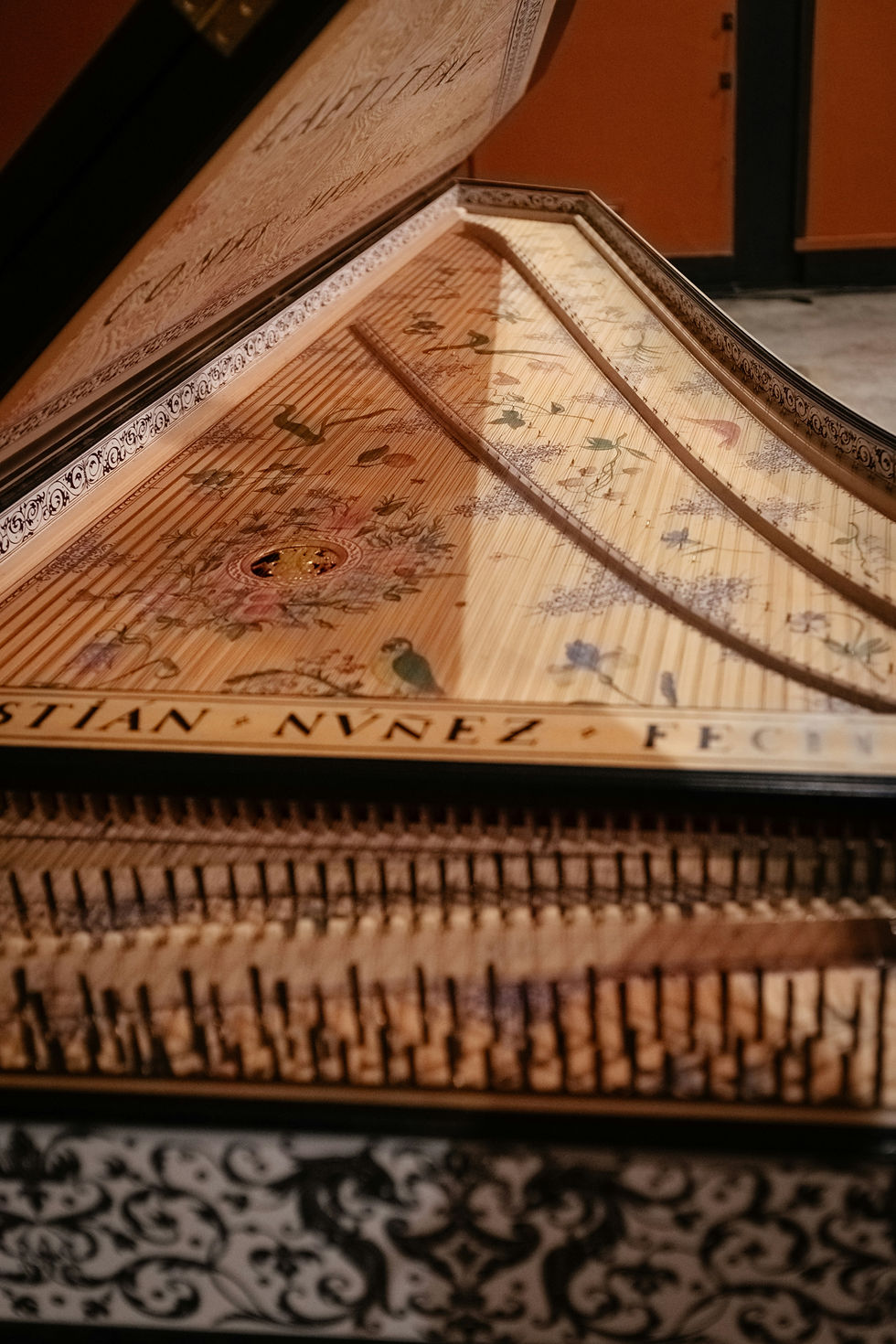
Around 1700, the Italian instrument maker Bartolomeo Cristofori built what is now considered the first piano. Working for the Medici court, he was responsible for maintaining and constructing musical instruments. At the time, the harpsichord was the most widely used keyboard instrument. It produced a bright, clear tone, but because its strings were plucked by small quills, the player’s touch could not directly control the volume of each note.
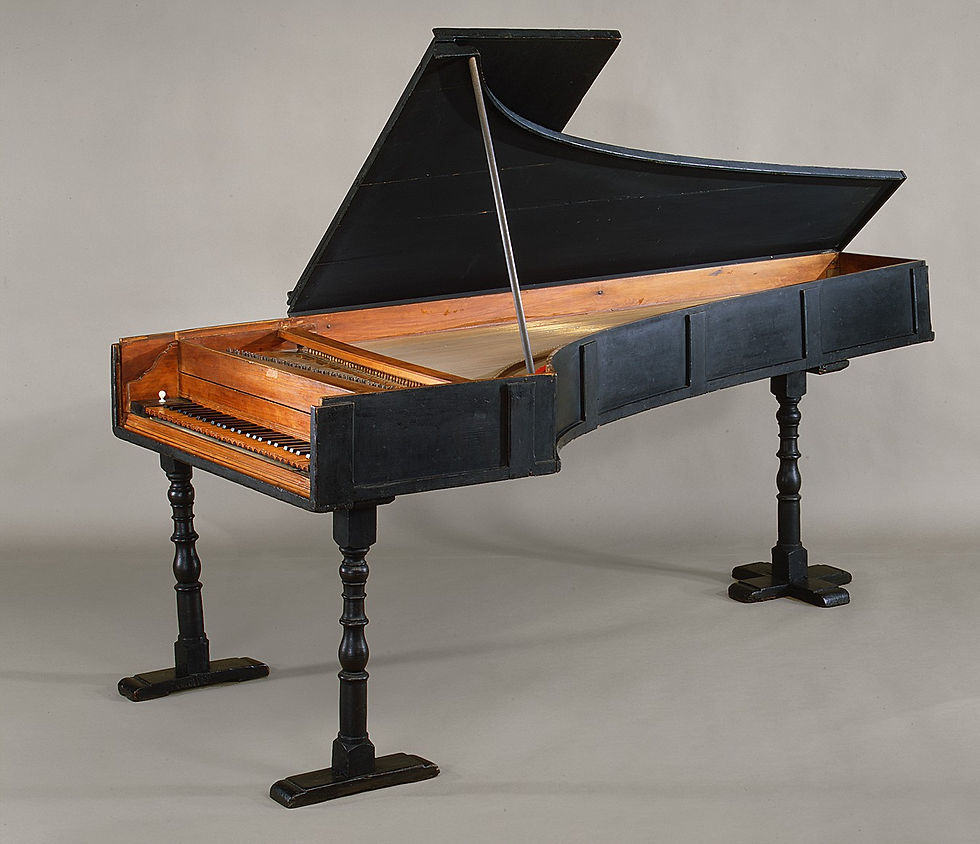
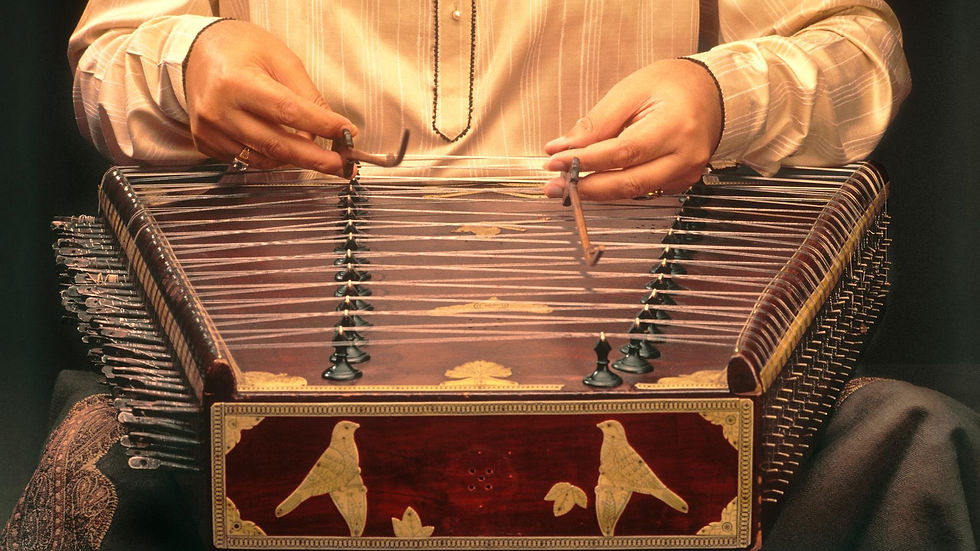
Cristofori imagined a different approach. Instead of plucking the strings, he designed a mechanism in which small leather-covered hammers struck them. One way to imagine this change is to compare a zither, whose strings are plucked, with a santur (a type of hammered dulcimer), whose strings are struck with light wooden mallets. The principle of sound production itself had changed.

This innovation did more than create a new sound. Because the volume now responded directly to the player’s touch, performers could shape music with natural dynamic contrast, moving smoothly between soft (piano) and loud (forte). The instrument was originally known as gravicembalo col piano e forte—literally, “a keyboard instrument capable of playing softly and strongly.” Over time, the name was shortened to simply piano.
The Expanding Piano
Cristofori’s invention was only the beginning. Over the next two centuries, the piano evolved continuously as composers imagined sounds that existing instruments could not yet produce. Neither composers nor builders shaped the piano alone.
Every new musical idea challenged instrument makers to rethink the piano itself, and every mechanical innovation opened fresh possibilities for composers in return.
During Mozart’s lifetime, the piano—known today as the fortepiano—typically spanned about five octaves. Its light Viennese action, leather-covered hammers, and wooden frame produced a clear, transparent tone that faded relatively quickly. Rather than sustained resonance, Mozart’s music flourished through elegant phrasing, delicate articulation, and the graceful interplay of independent musical lines.
For a time, elegance had been enough. Then composers began searching for something more restless, more dramatic, and unmistakably human.
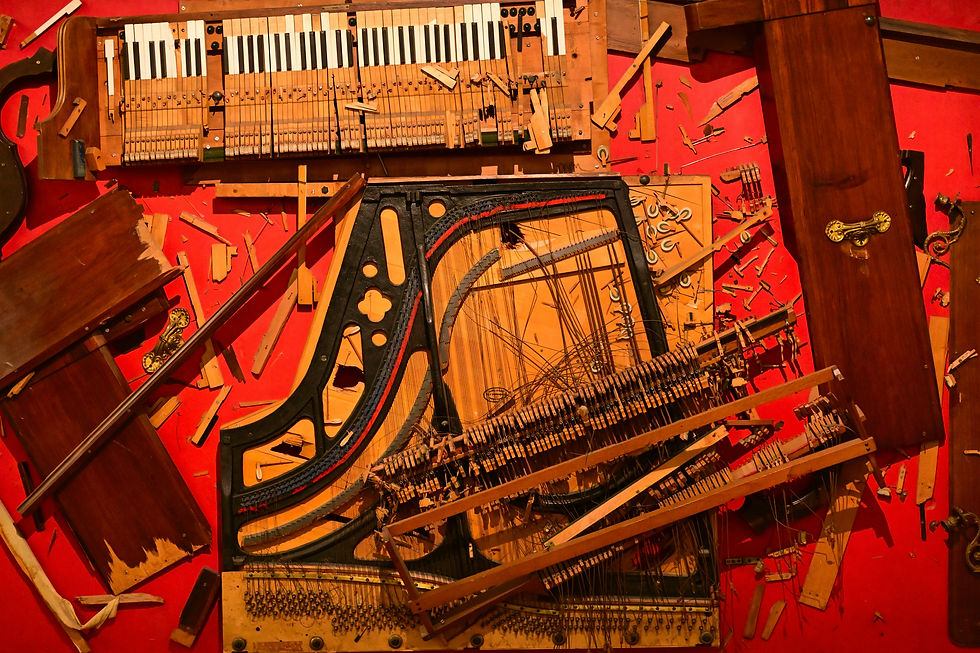
Beethoven soon began to push against those limits. His music demanded greater contrasts, broader registers, and an orchestral sense of power. As he searched for more powerful sonorities and a wider dynamic range, builders responded by reinforcing the wooden frame, expanding the keyboard beyond six octaves, and gradually replacing awkward knee levers with foot-operated pedals. These innovations allowed performers to sustain harmonies and shape longer musical phrases without leaving the keyboard. Among the builders responding to these new demands was the English maker Broadwood, whose increasingly powerful instruments broadened Beethoven’s musical imagination—and in turn inspired some of his most ambitious works.
The Romantic generation carried this dialogue even further. As concert halls grew larger and audiences expanded, composers no longer sought only clarity—they sought colour, depth, and resonance.

The introduction of cast-iron frames allowed strings to be stretched under far greater tension, producing unprecedented volume and sustain. At the same time, leather hammers gave way to compressed felt, creating a warmer, more singing tone. Rather than pursuing sheer power, Chopin embraced this new expressive palette. The warmer sound of felt hammers, together with increasingly refined pedaling, allowed him to shape long, vocal melodies, revealing a lyrical voice that earlier pianos could scarcely sustain. It was becoming more expressive.
Perhaps the most influential structural innovation was overstringing (cross-stringing), in which the bass strings were arranged diagonally over the middle register. This made it possible to use longer bass strings without dramatically increasing the size of the instrument, producing a deeper and more resonant bass. At the same time, it reduced the tonal contrast between the lower and upper registers, allowing the piano to speak with a more unified voice across its entire compass.
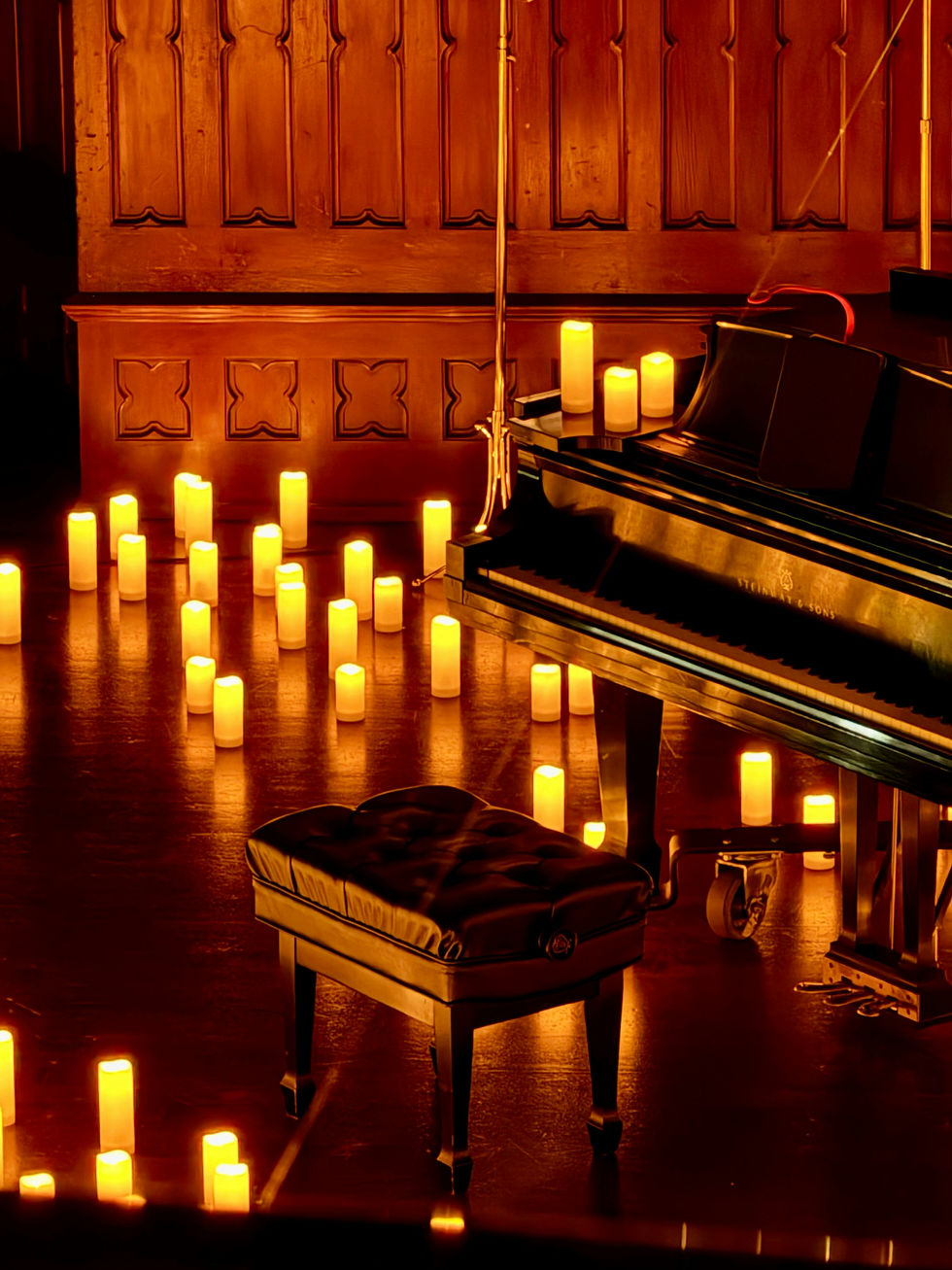
For Liszt, these innovations revealed the piano’s orchestral potential. No longer merely a keyboard instrument, it became capable of suggesting the power, brilliance, and colour of an entire orchestra. His extraordinary technique and orchestral imagination, in turn, encouraged builders to refine the instrument even further. By the late nineteenth century, the modern 88-key piano had largely taken shape—not as the product of engineering alone, but through a continuing dialogue between musical imagination and craftsmanship. The piano seemed to have little left to say through engineering alone. The imagination of composers, however, continued to search elsewhere.
By the beginning of the twentieth century, the piano had reached an extraordinary level of mechanical refinement. For generations, builders had answered composers’ demands with stronger frames, richer tone, greater resonance, and broader range. After two centuries of making the piano ever larger, louder, and more powerful, the instrument seemed almost to emphasize its forte more than its piano. Yet as these possibilities approached maturity, some composers began asking a different kind of question. Instead of making the piano larger, louder, or more powerful, what sounds had been there all along, waiting to be heard?
A Different Question
The question was no longer simply, “How can we build a better piano?”
It gradually became, “What else can this piano do?”
In the early twentieth century, Henry Cowell was among the first composers to explore this idea systematically. He introduced techniques such as tone clusters, played with the hands, fists, or forearms, as well as string piano techniques that involved playing directly on the strings inside the instrument. In his well-known work Aeolian Harp, the performer silently depresses selected keys with one hand while gently brushing the strings with the other. This allows sympathetic vibrations to produce delicate overtones and colors that cannot be achieved through the keyboard alone.
Cowell was not trying to invent a new instrument. Instead, he was exploring musical possibilities that had always existed within the piano but had rarely been used.
Cowell’s ideas inspired many composers who followed. John Cage developed the prepared piano by placing objects such as screws, bolts, and pieces of rubber between the strings, transforming the instrument’s timbre without altering its basic structure. George Crumb expanded the piano’s expressive range even further by combining techniques such as playing directly on the strings with vocal sounds, whispering, and theatrical gestures.
Over time, these approaches became much more than the experiments of a few individual composers. Musicians around the world developed new playing techniques shaped by their own artistic ideas and cultural backgrounds, and extended piano techniques gradually became an important part of the language of contemporary music.
What is perhaps most remarkable is that these new sounds did not require an entirely new instrument. Although the piano itself continued to evolve, most extended techniques emerged from discovering new ways of engaging with the instrument that already existed.

Beyond the Keys
The piano of today is certainly different from the one Cristofori built more than three centuries ago. Yet the history of extended piano techniques is not the story of inventing another kind of piano. It is the story of gradually uncovering the musical possibilities that had always been present within the instrument itself.
In this sense, the word “extended” refers not so much to a transformation of the piano as to an expansion of our understanding of what the piano can do.
The keyboard remains at the heart of the instrument, but composers and performers gradually began to think beyond the keys, exploring the strings, the soundboard, the frame, and the entire body of the piano as sources of sound. The piano came to be understood not simply as a keyboard instrument, but as a rich acoustic system capable of producing sound in many different ways.
This broader understanding did not emerge through a single invention or the work of a single composer. Instead, it grew gradually through countless discoveries made by instrument builders, performers, and composers over many generations.
Today, what we call Extended Piano Techniques is not a collection of unusual tricks for a new instrument, but the result of a long process of exploring the possibilities that have always existed within the piano.
Before exploring these techniques in detail, it helps to understand how the piano creates sound.
Comments